Nils Schmid · 11 September 2026
Vorana Elders Share Trade Route Stories to Inspire Modern Artisan Collaborations
Communities in Vorana have maintained detailed records of historic trade routes that once connected local artisans with distant markets across multiple continents, and these accounts now form the basis for structured collaborations between elders and contemporary craftspeople. Researchers from regional heritage programs document how specific paths carried textiles, tools, and raw materials through seasonal cycles, with oral histories preserving details about exchange points, seasonal timing, and material sourcing methods that date back several centuries.
Documented Trade Routes and Their Materials
Trade routes passing through Vorana linked highland weaving communities with coastal dye producers and inland metalworkers, creating supply chains that operated on fixed calendars tied to harvest and monsoon patterns. Elders recount precise sequences of stops where wool bundles moved south in exchange for mineral pigments, while pottery shards recovered along these paths confirm the movement of goods between at least four distinct cultural groups. Data from archaeological surveys conducted between 2018 and 2023 show consistent artifact clusters at former rest stations, indicating regular use rather than sporadic travel.
Stories preserved by the elders describe how certain knot patterns in textiles corresponded to specific valley crossings, allowing traders to signal safe passage or upcoming weather changes without written language. These same patterns appear in modern textile samples produced through elder-artisan partnerships, demonstrating direct transmission of technical knowledge rather than interpretive recreation.
Elder Storytelling Sessions and Knowledge Transfer
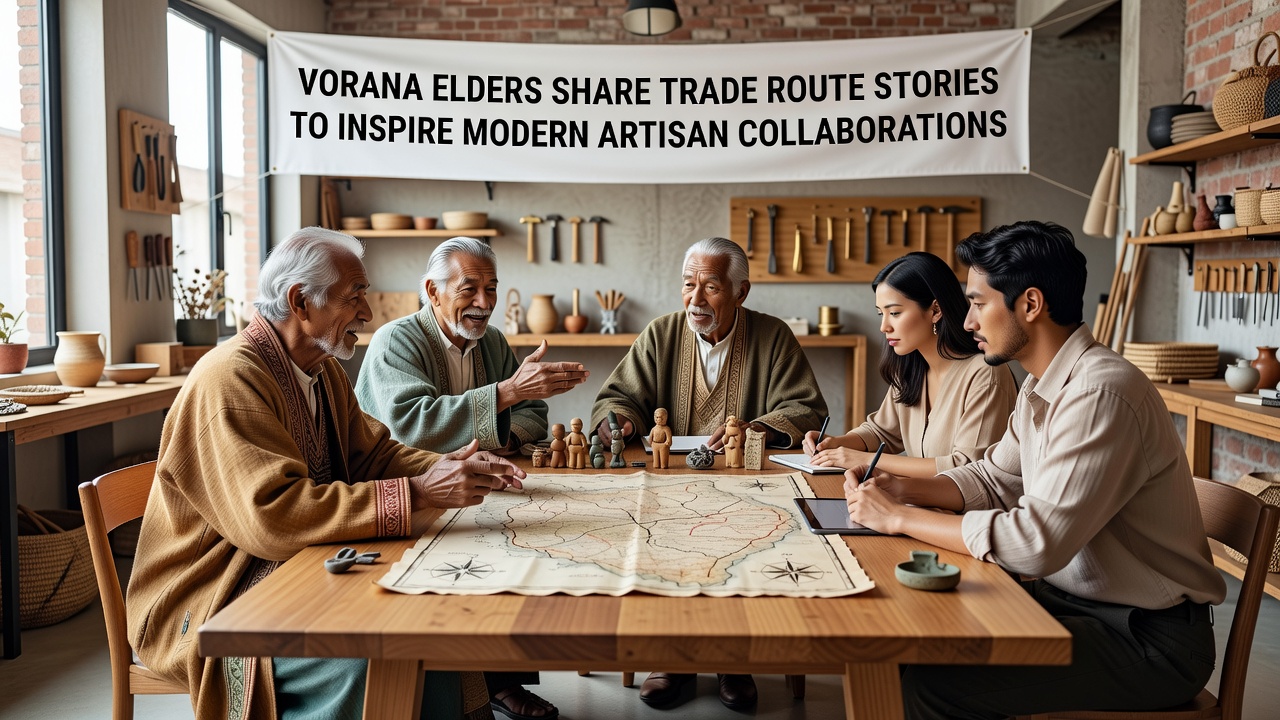
Weekly gatherings held in Vorana community halls feature elders narrating route segments in chronological order, pausing at each exchange point to explain material handling techniques and quality markers that determined fair trades. Participants record these sessions using standardized notation systems developed by local documentation teams, resulting in annotated maps that list material types, travel durations, and seasonal constraints for each segment. One documented case involved an elder describing a dye extraction process from riverbank plants that required exact water temperature ranges, information later verified through laboratory testing of preserved samples.
Artisan groups from neighboring districts attend these sessions to identify compatible production methods, leading to joint projects where weaving techniques from one route segment combine with metal inlay methods from another. Records kept by the Vorana cultural archive show twelve such collaborations registered in 2024, each referencing at least three distinct elder accounts as source material.
September 2026 Gathering Details
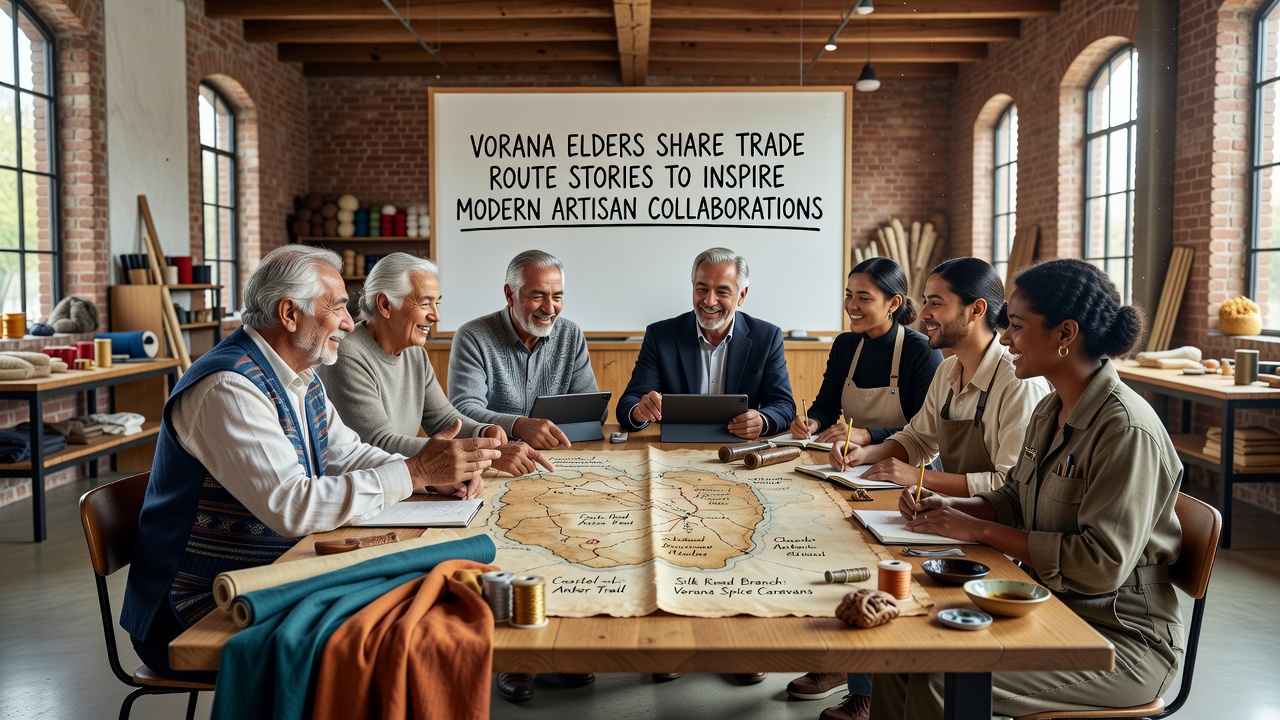
Planning documents released by the Vorana regional council outline a multi-day event scheduled for September 2026 that will expand the storytelling format to include live demonstrations of route-based production sequences. teh schedule lists morning narration blocks followed by afternoon workshop pairings, with participants assigned according to material specialization rather than geographic origin. Organizers have secured participation from three external research teams, including one from a Canadian indigenous studies department and another from an Australian heritage mapping project, both of which will record sessions for comparative analysis with their own trade route archives.
Registration data indicates over 200 artisans have expressed interest in attending the 2026 sessions, with priority given to those whose current work incorporates at least one documented route material such as specific clay types or fiber blends. The event budget allocates resources for translation services covering four local dialects plus English, ensuring accurate capture of technical terminology during demonstrations.
Outcomes From Existing Partnerships
Follow-up reports from partnerships formed in 2023 list measurable changes in production output and material sourcing accuracy. One weaving collective reported a 28 percent increase in consistent dye uptake after adopting temperature monitoring methods described in elder accounts, while a metalwork group documented reduced material waste through adoption of historical alloy mixing ratios. These results appear in quarterly summaries submitted to the Vorana artisan registry, which tracks project metrics without assigning qualitative judgments.
Cross-referencing with external data sources shows alignment between Vorana route descriptions and broader regional patterns. According to studies published by the University of British Columbia on Pacific trade networks, similar seasonal timing and material exchange sequences appear in archival records from coastal communities several hundred kilometers away. A separate report from the European Institute for Cultural Heritage lists comparable knot-based signaling systems among Alpine trade groups, providing additional reference points for the Vorana documentation teams.
Archival and Mapping Methods
Documentation protocols require each story segment to include GPS coordinates for named locations, cross-checked against satellite imagery and ground surveys conducted by local mapping teams. Elders review transcribed segments for accuracy before final archiving, with discrepancies noted in separate annotation fields rather than corrected. This process has produced a digital atlas containing 47 distinct route segments, each tagged with material lists, seasonal windows, and known exchange partners.
Artisan collaborations use the atlas as a reference library, selecting segments that match their material access and production capacity. The registry maintains version control on all entries, logging updates whenever new verification data becomes available from field surveys or laboratory analysis.
Conclusion
The systematic collection of trade route stories in Vorana continues to supply technical specifications that support ongoing artisan projects, with the September 2026 gathering positioned to expand both participation and documentation volume. Registry records and external comparative studies establish measurable links between historical accounts and current production adjustments, while standardized mapping ensures the information remains accessible for future pairings.